
9 Jaw-Dropping Inventions That Were Way Ahead of Their Fecking Time
'...people thought he was out of his fecking mind...'

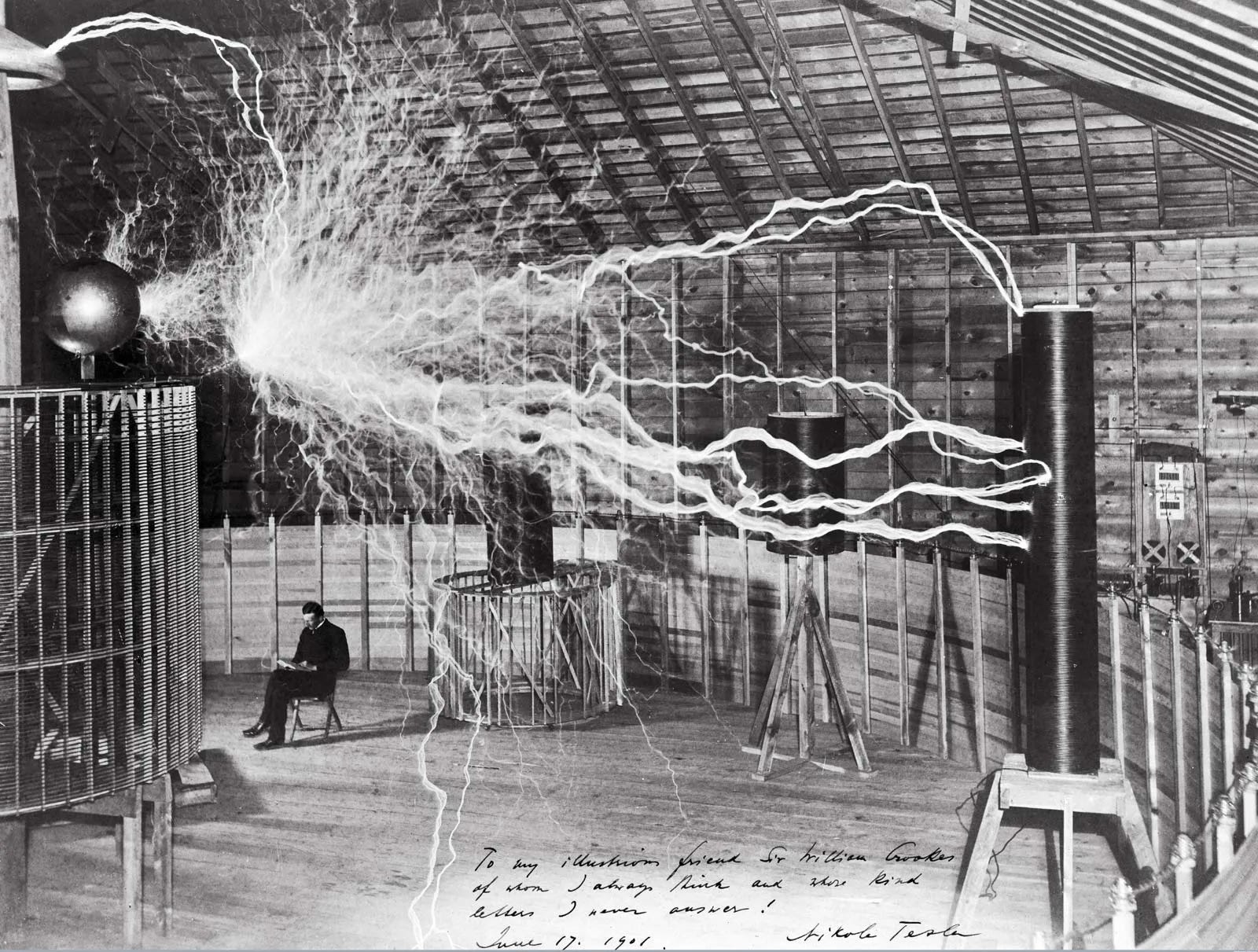
Ah, the bittersweet lament of the visionary inventor - toiling away in obscurity, only for their revolutionary creations to be cruelly rejected or ignored by the masses, their true genius going unrecognized until long after they're gone.
Well, prepare to meet 9 such pioneering innovators whose wild, seemingly impossible ideas were simply too far ahead of their time to gain widespread acceptance...at least, in their own lifetimes.
From mind-blowing transportation concepts to mind-warping virtual reality tech, this listicle is a guided tour through a multiverse of uncannily prescient breakthroughs that were tragically dismissed as the fanciful ravings of mad scientists.
So get ready to have your minds blown as we uncover 9 jaw-dropping inventions that should've made history, if only the rest of the world wasn't so fecking blind to their true potential.
1. Nikola Tesla's Wireless Energy Transmission
These days, we take wireless electricity and charging technology for granted. But over a century ago, a certain Serbian-American genius named Nikola Tesla was already pioneering the concept - and dreaming of a future where we could power devices and buildings without a single cord in sight.
Tesla's ambitious Wardenclyffe Tower project aimed to create a global system of wireless electricity transmission, allowing power to be broadcast freely through the air and eliminating the need for wasteful wired infrastructure.
Of course, this radical notion was immediately dismissed by skeptical industrialists as the work of a crackpot, and the project was eventually scrapped.
Little did they know, Tesla's "madness" would one day become the foundation for our modern wireless world. Joke's on you, haters!
2. The Barrister Typewriter Anyone?
We've all seen the iconic image of a writer furiously pounding away at a vintage typewriter, their fingers dancing across the keys with rhythmic perfection.
But what if I told you one pioneering inventor tried to revolutionize that hallowed process - by creating a typewriter that didn't use keys at all? Enter the Barrister Typewriter, a bizarre 19th century contraption that utilized a swiveling, articulated arm to directly strike the paper and produce letters, rather than traditional keyed input.
The design promised increased speed and efficiency, eliminating the need for the awkward "hunt and peck" method.
However, the Barrister's complex mechanics and non-traditional operation proved too radical for the public to embrace, and it quickly faded into obscurity. Of course, with the rise of touchscreens and voice-to-text technology, maybe this feckless forefather of modern digital input wasn't so crazy after all.
3. Buckminster Fuller's Dymaxion Car
You know the old saying - "The future is now!" Well, visionary architect and designer Buckminster Fuller took that sentiment to heart when he dreamed up his revolutionary Dymaxion Car back in the 1930s.
A radical departure from the traditional automobile, this three-wheeled, aerodynamic wonder promised 30 miles per gallon and the ability to turn on a dime - all while accommodating up to 11 passengers!
Sadly, Fuller's innovative but unconventional design was simply too far ahead of its time, and the Dymaxion never made it past a handful of prototypes before being scrapped.
But with today's increasing demand for sustainable, space-efficient transportation, who knows - maybe this wild vision of the future will finally get its chance to shine. After all, there's no such thing as a bad idea, just one whose time hasn't come yet. So get to work on that flying car, future geniuses!
4. Edward Thorp's Wearable Computer
These days, the concept of a "wearable computer" sounds like the most mundane tech trend imaginable. But back in the 1960s, when mathematician Edward Thorp first unveiled his pioneering digital fashion statement, people thought he was out of his fecking mind.
Designed to give the wearer a distinct advantage in casino games like blackjack, Thorp's hidden, button-operated computer would analyze the cards being dealt and feed strategic advice directly to an earpiece.
Unsurprisingly, casinos were less than thrilled about this high-tech cheating device, and quickly banned both Thorp and his invention.
But looking at how ubiquitous wearable tech has become, it's clear this clever innovator was simply way ahead of the curve. Maybe next time, the house will be a bit more sporting about your futuristic advantage!
5. Philo Farnsworth's Electronic Television
These days, the humble television is about as commonplace as dirt. But back in the 1920s, when a young inventor named Philo Farnsworth unveiled his revolutionary "electronic television" system, his peers thought he was completely off his rocker.
Rather than the cumbersome, mechanical "television" tech being developed by the competition, Farnsworth's all-electronic design promised higher image quality, reduced cost, and far greater commercial viability.
But despite a successful public demonstration, the television establishment of the time - led by the powerful RCA corporation - ruthlessly squashed Farnsworth's breakthrough, intent on protecting their own inferior, outdated technology.
By the time RCA's mechanical TVs hit the market, Farnsworth's superior electronic system had been buried, its visionary creator denied the acclaim he so rightfully deserved. Talk about a true innovator being robbed of their legacy!
6. Vannevar Bush's Memex
In the 1930s, engineer Vannevar Bush envisioned a revolutionary information storage and retrieval system that would anticipate the modern concept of hypertext by several decades.
Dubbed the "Memex," this proto-computer was essentially an early vision of the World Wide Web - a vast, interconnected repository of knowledge and data that users could access and navigate via associative, non-linear trails. Sound familiar?
Well, it should, because Bush's innovative ideas about information management and dynamic linking directly inspired the development of both the hyperlink and the internet as we know it today.
Unfortunately, his Memex concept remained firmly in the realm of theory, never actually being built in his lifetime. But hey, at least he got to see his visionary ideas ultimately come to fruition - even if it took the rest of the world several decades to catch up!
7. Charles Babbage's Difference Engine
When it comes to the history of computing, few names loom as large as Charles Babbage - the pioneering 19th century mathematician who first conceived of a mechanical, programmable "analytical engine" that anticipated the modern digital computer by over a century.
Babbage's grand idea, known as the "Difference Engine," was an intricate assemblage of gears, levers, and punch cards designed to automatically calculate and print mathematical tables. At the time, it was hailed as a revolutionary breakthrough that would forever change the nature of numerical calculation.
The only problem? Building the Difference Engine to Babbage's exacting specifications proved prohibitively expensive and complex, leading to the project being abandoned during his lifetime.
But hey, at least the eccentric visionary got to live vicariously through modern-day engineers who finally built a working Difference Engine replica in the 1990s. Better late than never, right?
8. Georges Lemaître's Big Fecking Bang Theory
These days, the concept of the Big Bang - the idea that the entire observable universe originated from an incredibly hot, dense state that has been expanding and cooling ever since - is widely accepted as scientific fact.
But back in the 1920s, when pioneering physicist Georges Lemaître first proposed this radical theory, the scientific establishment thought he was absolutely bonkers.
Lemaître's revolutionary idea directly contradicted the prevailing view of a static, eternal universe, and he faced intense skepticism and opposition from his peers. It wasn't until decades later, when the supporting evidence became overwhelming, that Lemaître's Big Bang model finally gained widespread acceptance.
Talk about a true visionary being ahead of his time! Although, to be fair, the name "Big Bang" wasn't actually Lemaître's idea - he just called it the "hypothesis of the primeval atom." But hey, at least he got the last laugh.
9. Hedy Lamarr's Frequency-Hopping Technology
In the annals of technological innovation, few names are as surprising as that of Hedy Lamarr - the beautiful Hollywood starlet best known for her glamorous acting career.
But unbeknownst to most, Lamarr was also an accomplished inventor whose revolutionary ideas laid the groundwork for modern wireless communications.
During World War II, she co-patented a "frequency-hopping" system designed to prevent radio-guided torpedoes from being jammed by the enemy. This innovative technique of rapidly switching radio frequencies to create an unbreakable signal was decades ahead of its time. Sadly, the military rejected Lamarr's invention, deeming it too complex and impractical.
It wouldn't be until the 1960s that similar "spread spectrum" technology started being adopted, ultimately paving the way for modern WiFi, Bluetooth, and cellular networks. Talk about the ultimate "I told you so!" moment.
Well, there you have it, folks - 9 jaw-dropping inventions that were so far ahead of their time, the world just wasn't ready to embrace their true visionary brilliance.
From wireless electricity and computer-assisted casino cheating to pioneering theories of the universe and progenitors of modern wireless tech, these trailblazing innovators were clearly operating on an entirely different wavelength than the rest of us mere mortals.
So what does this all mean for us, the humble consumers of 21st century technology? Well, for one, it should remind us to always keep an open mind when confronted with radical new ideas and concepts.

Enjoyed the content? There are a few ways you can show your appreciation:
1. Free Subscriber: You're awesome! All content remains free for you. Forever.
2. Supporter: Your choice to support empowers writers and fuels creativity.
3. Founding Member: You're a champion of our mission, ensuring writers thrive.
Can't commit to a subscription? No worries! You can still...
Remember, every contribution, while optional, is invaluable. You're not just funding content, you're nurturing a community of fellow 'That's Fecking Nuts' enthusiasts! Have a nice fecking day ;-)